
Why the Nominee Crackdown Is Actually Bullish for Pattaya Condos (And What Smart Buyers Are Doing Instead)
Thailand's 2026 nominee crackdown is freezing Phuket and Samui villa deals — but it's quietly turning Pattaya's freehold condo market into the safest play for foreign investors.
The Headline Everyone Misread: Crackdown ≠ Closed Market
If you've scrolled expat Facebook groups, Telegram channels, or international property news in the last few weeks, you've seen the panic. "Thailand cracks down on foreign property owners." "DBD targets nominees." "Villa market in freefall." The headlines are designed to make you click — and to make you nervous.

Here's what almost every article got wrong: the 2026 nominee enforcement push targets exactly one thing — Thai shareholders fronting for foreigners inside companies that hold land and villas. That's it. Condominium units purchased under the 49% foreign freehold quota — the structure that has protected international buyers since 1979 — are completely, legally, structurally untouched.
So while villa buyers in Phuket and Samui are scrambling to restructure deals, hire new lawyers, and unfreeze escrow accounts, something quieter and more interesting is happening 150 kilometres southeast of Bangkok. Capital is rotating. Smart buyers are pivoting. And Pattaya — with the deepest, cleanest, most condo-heavy inventory in Thailand — is suddenly the most bullish foreign-ownership story in a decade.
This article makes the counter-intuitive case: the crackdown isn't bad news for foreign buyers. It's a forced upgrade to a better legal vehicle — and Pattaya is where that vehicle lives.
What the 2026 Nominee Crackdown Actually Targets
Let's strip out the noise. The Department of Business Development (DBD), working alongside the Land Department and DSI, has accelerated enforcement of Section 96 and Section 113 of the Land Code and the Foreign Business Act. The target is narrow and specific: Thai nationals holding shares in limited companies on behalf of foreigners, where the real economic owner of the underlying land or villa is the foreign party.
If that sounds technical, the practical translation is simpler. For two decades, foreigners who wanted a villa with land in Thailand commonly set up a Thai limited company — typically 51% owned by Thai "shareholders" (often the lawyer's secretary, a driver, or a friend of a friend) and 49% owned by the foreign buyer. The foreigner controlled the company via preferred shares, loan agreements, and signing rights. The company "owned" the land. Everyone knew it was a workaround. Authorities mostly looked the other way.
That tolerance is over. Penalties now include fines up to THB 200,000, imprisonment up to two years, and — most painfully — forced divestment of the underlying asset within a court-ordered timeframe, often at fire-sale prices.
Crucially, here's what is not affected:
- Condominium units purchased under Section 19 of the Condominium Act within the 49% foreign freehold quota of a building.
- Registered leaseholds of up to 30 years on land or villas (a legitimate, transparent structure).
- BOI-approved holdings for qualifying business investments.
- Inherited land through legal Thai spouse arrangements with proper documentation.
If you want the full legal architecture, our complete foreign ownership guide walks through every viable structure currently recognized in Thai law.
Why Phuket and Samui Villa Markets Are Freezing
The collateral damage on the island markets is real, and brokers on the ground will confirm it privately even if their marketing decks won't. Industry estimates suggest 70–80% of foreign villa purchases in Phuket and Koh Samui over the past decade used Thai company nominee structures. That's not a fringe practice — that was the market.
Right now, the consequences are stacking up:
- Law firms in Phuket are pausing new company formations for foreign clients pending clearer guidance.
- Escrow accounts holding deposits on villa deals signed in late 2024 are stuck while buyers and sellers renegotiate structure.
- Resale listings for company-held villas are sitting on the market 2–3x longer than 18 months ago, with sellers cutting asking prices 10–20%.
- Buyers who closed in 2023–2024 are now paying THB 80,000–250,000 in legal fees just to restructure into compliant leasehold or BOI vehicles — at their own cost.
This isn't a temporary blip. It's a structural repricing of an entire asset class.
Why Pattaya's Condo-Heavy Inventory Is the Counter-Trade
Now flip the map. Pattaya's property market has always looked different from Phuket's. Where Phuket sells lifestyle villas with infinity pools to ultra-high-net-worth holiday buyers, Pattaya sells high-density, high-quality condominiums to a much broader international demographic: retirees, remote workers, yield-focused investors, and weekend Bangkok escapees.
The numbers tell the story. Roughly 60% of Pattaya's property transactions by volume are condominiums, compared to villa-dominated markets on the islands. And every one of those condo transactions registered to a foreign name uses the same bulletproof structure: direct foreign freehold under the Condominium Act of 1979.
No nominees. No shell companies. No annual audits. No DBD exposure. Your name goes directly onto the blue chanote (title deed) at the Land Office, and that title is internationally recognized, mortgageable through Thai banks, fully transferable, and inheritable.
The Condominium Act has protected foreign buyers for 45+ years — it pre-dates the nominee crackdown by nearly half a century. It's not a loophole being closed. It's the foundational, intentional, government-designed framework for foreign condo ownership in Thailand.
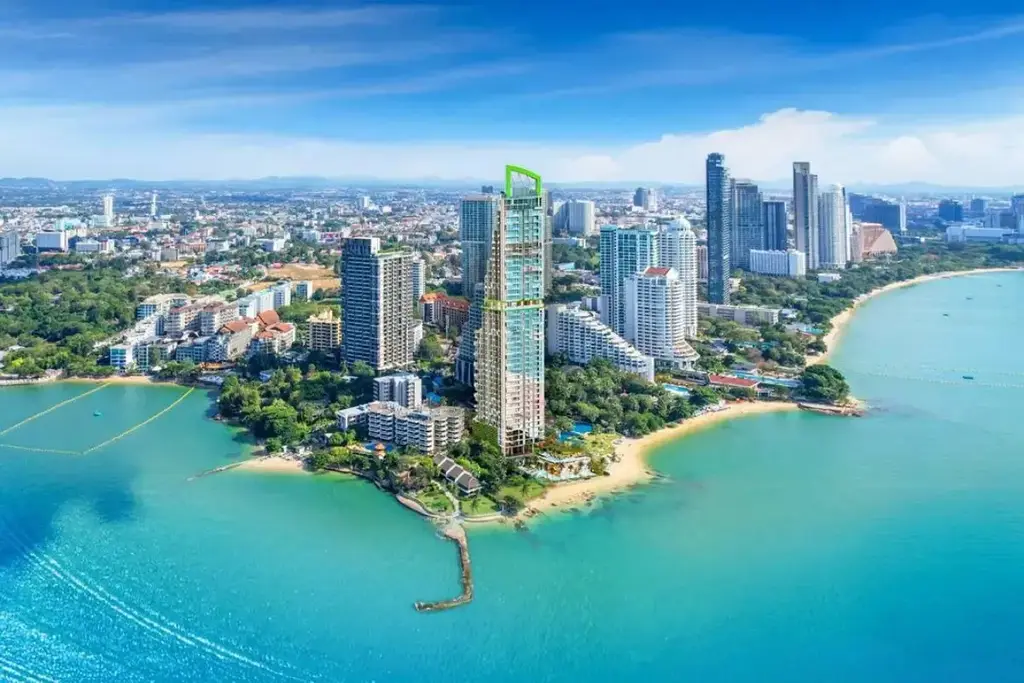
Pattaya Foreign Freehold Condo Snapshot 2026
The Three Buyer Profiles Pivoting Into Pattaya Right Now
We're seeing this rotation in real time at our office. Three distinct profiles are arriving at Pattaya from very different starting points:
- The paused Phuket villa buyer. They had a THB 35 million villa under contract in Bang Tao or Layan, the lawyer hit pause in late 2025, and rather than wait out the legal uncertainty, they're redeploying the deposit into a sea-view freehold condo in Wongamat or Pratumnak. Two units for the price of one villa, double the legal clarity, and rental income from day one.
- The Bangkok-based expat consolidator. Long-term residents who own multiple smaller assets are using this moment to consolidate into a single, larger, cleanly-titled Pattaya freehold unit — typically a 2-bedroom sea-view in a branded development with strong rental demand for the 60% of the year they're not using it.
- The European retiree. Originally drawn to the dream of a Samui villa, they've recalculated. The legal headache, the maintenance burden, and the rental complications now outweigh the lifestyle appeal. A Jomtien or Na Kluae condo with full amenities, hospital access, and a clean chanote is the rational choice.
Foreign Freehold Condo Math: Why the Numbers Still Work in 2026
Beyond the legal argument, the financial case for the pivot is compelling. Let's run the comparison honestly.
| Factor | Phuket/Samui Villa (Company Structure) | Pattaya Condo (Foreign Freehold) |
|---|---|---|
| Ownership structure | Thai company + nominees | Direct foreign freehold |
| Nominee crackdown exposure | High | Zero |
| Typical entry price | THB 25M+ | THB 4–12M |
| Transfer timeline in 2026 | Delayed / frozen | 30–45 days |
| Annual compliance cost | THB 50,000–150,000 | THB 0 |
| Resale buyer pool | Shrinking | Global |
| Gross rental yield | 4–6% | 6–8% |
| Legal clarity score | Low / Uncertain | High / Codified |
The math is uncomfortable for villa proponents and crystal clear for condo buyers. A THB 8 million sea-view Pattaya condo at 7% gross yield generates roughly THB 560,000 per year in rental income, with effectively zero compliance overhead. A THB 30 million villa at 5% gross yield generates THB 1.5 million — but subtract company audit fees, accounting, nominee management, larger maintenance costs, and the now-uncertain exit valuation, and the risk-adjusted return collapses.
The exit liquidity point matters most. The buyer pool for a clean Pattaya freehold condo is global and growing — every Russian, Chinese, German, British, Korean, and American buyer can transact without restructuring. The buyer pool for a Phuket nominee-structured villa just shrank dramatically, because no informed 2026 buyer wants to inherit the legal exposure of a previous owner's setup.
For a deeper comparison of structures, our freehold vs leasehold breakdown covers exactly when each makes sense.
Where to Deploy Capital: Pattaya Submarkets That Benefit Most
Not all of Pattaya is created equal, and the rotation capital is concentrating in three specific submarkets where foreign quota availability is still strong but tightening fast.
Na Kluae and Wongamat — Branded Beachfront
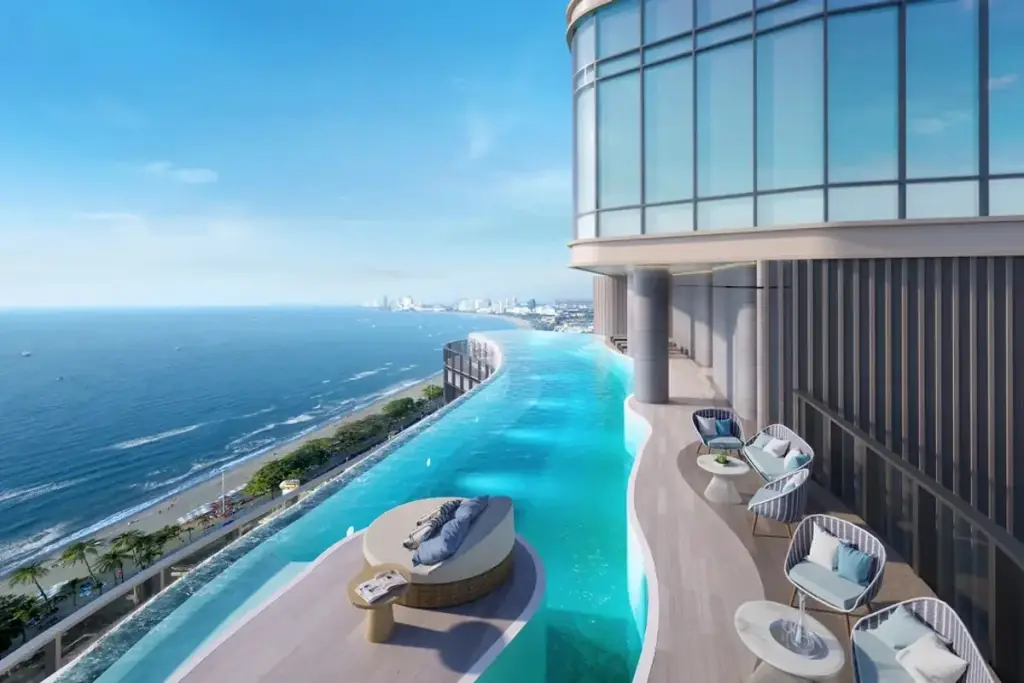
The north end of Pattaya is where the Phuket-pivot money is landing. Direct beachfront, branded developers, and architecturally significant towers. The Riviera Palm Beach in Na Kluae is a textbook example — full foreign freehold quota, beachfront positioning, and the kind of branded resort amenities that buyers expected from a Phuket villa, delivered in a legally bulletproof condo wrapper. Once Pattaya and the broader Riviera portfolio sit in this same band.
Pratumnak and Jomtien — Sea-View Value
For buyers who want the view without the beachfront premium, Pratumnak Hill and Jomtien offer THB 4–9 million entry points with strong sea views and excellent rental demand. Aquarous Jomtien Pattaya is attracting a disproportionate share of European retirees who were originally looking at Samui villas — same lifestyle, half the price, zero structural risk. Copacabana Coral Reef sits in this same value-meets-view bracket.
Central Pattaya — Yield-Focused Plays
For investors prioritizing cash yield over capital appreciation, central Pattaya offers the highest gross rental returns thanks to short-term rental demand and proximity to Walking Street, Terminal 21, and Central Festival. Zenith Pattaya freehold units and City Center Residence are the names in play here, with foreign quota still available on selected stacks.
The Buyer Checklist for a Clean 2026 Purchase
Whichever submarket you choose, run through this list before you sign anything:
- Confirm foreign quota availability in writing from the developer or juristic person — not a verbal "yes, we have space."
- Verify the chanote is condominium title (the blue Or Chor 2 document), not a leasehold being marketed as freehold.
- Ensure the FET (Foreign Exchange Transaction) form is correctly issued for your inbound wire — this is mandatory for the foreign freehold registration.
- Use a SET-listed bank escrow or licensed escrow agent, not a developer's in-house "trust" account.
- Walk away from any agent suggesting a company structure for a condo purchase. It's unnecessary, expensive, and now actively dangerous. Big red flag.
Bottom Line: Anxiety Is Mispricing the Opportunity
The nominee crackdown is not bad news for the Thai property market. It's housekeeping. It's the government doing what it should have done a decade ago — closing the back door that was distorting the villa market and pushing every foreign buyer toward the front door that's been wide open since 1979.
That front door leads to Pattaya. The city has the deepest condo inventory in Thailand, the most active branded developers, the strongest infrastructure tailwinds (the Bangkok–Pattaya motorway expansion, U-Tapao International Airport upgrade, and the long-awaited high-speed rail link), and a regulatory framework for foreign ownership that's older than most of the buyers reading this article.
The panic headlines are mispricing the opportunity. While the rest of the market hesitates, the informed money is moving — quietly, legally, and into exactly the kind of clean freehold condo title that 2026 rewards.
The crackdown doesn't close the foreign property market. It concentrates it into the cleanest vehicle Thailand offers — and that vehicle is parked in Pattaya.
Ready to move? Download the Pearl Property Pattaya 2026 Freehold Condo Buyer Sheet for our current shortlist of foreign-quota-available units across Na Kluae, Pratumnak, Jomtien, and Central Pattaya — then book a private viewing day with our team. The smart pivots are happening this quarter. Make sure yours is one of them.
Related guides
Related articles
- Can You Rent Out a Pattaya Condo on Airbnb? Rules, Building Policies and Safer Alternatives
- How to Sell a Condo in Pattaya as a Foreign Owner: Pricing, Documents, Taxes and Getting Your Money Home
- Best Condos in Central Pattaya (2026): Top High-Yield Buildings Ranked
More in Investment & Market
Popular searches: Condos for sale in Pattaya • Houses for sale in Pattaya • Villas for sale in Pattaya • Condos for sale in Jomtien • Condos for sale on Pratumnak Hill • Pool villas for sale in Huai Yai • Pattaya neighborhoods
Published by Pearl Property Pattaya — Thai-German real estate agency in Pattaya since 2015. Advice spoken and written in English, German, Thai, French and Chinese.
Contact: info@pearlpropertypattaya.com • WhatsApp
More articles about Pattaya real estate →