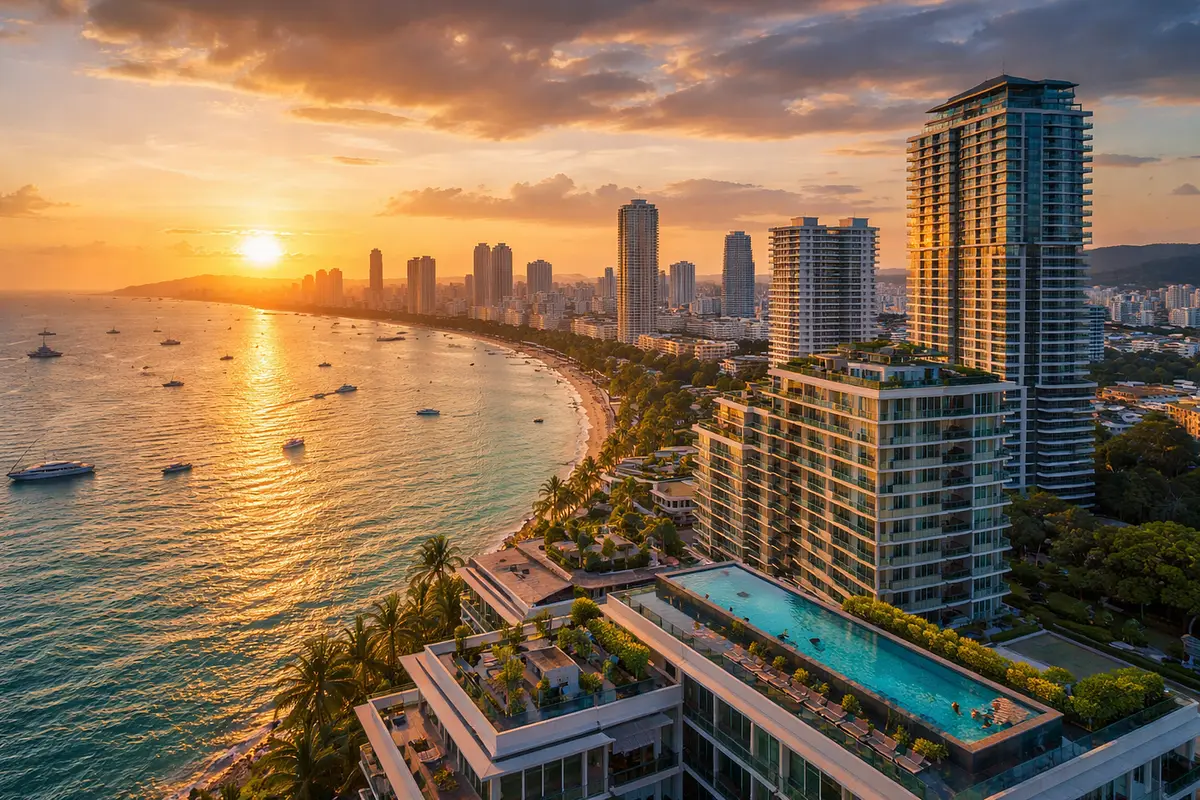
Der ultimative Leitfaden: Immobilienkauf in Thailand als Ausländer (2026)
Alles, was Sie vor dem Immobilienkauf in Thailand als Ausländer wissen müssen: was Sie besitzen dürfen, Eigentumsurkunden, der Kaufprozess, wer welche Steuern zahlt, das FET-Formular und warum Pattaya.
Ausländer kaufen seit Jahrzehnten Immobilien in Thailand. Dennoch wird der Markt nach wie vor vielfach missverstanden, und es kursieren zahlreiche Halbwahrheiten. Dieser Leitfaden von Pearl Property Pattaya erläutert die rechtlichen Grundlagen für 2026: was Sie besitzen dürfen, auf welche Dokumente es ankommt, wie ein sicherer Kauf abläuft und wer welche Kosten trägt.
1. Der rechtliche Rahmen: Was dürfen Ausländer tatsächlich kaufen?
Die Grundregel ist einfach: Ausländer dürfen in Thailand kein Land auf ihren eigenen Namen besitzen. Es gibt jedoch legale und sichere Wege, Immobilien zu erwerben, und Pattaya bietet einige der besten Möglichkeiten des Landes.

Option A: Condominium als Eigentum (Freehold) – der sicherste Weg
Nach dem Condominium Act dürfen Ausländer zusammen bis zu 49 % der gesamten verkaufsfähigen Wohnfläche eines Condominium-Gebäudes besitzen. Innerhalb dieser Quote gehört Ihnen Ihre Einheit uneingeschränkt: Ihr Name steht in der Eigentumsurkunde der Einheit, und Sie können sie verkaufen und vererben. Sie dürfen sie auf Monats- oder Jahresbasis vermieten. Aufenthalte unter 30 Tagen gelten nach dem Hotel Act als Hotelbetrieb, den eine private Condo-Einheit rechtlich nicht betreiben darf. Condo-Eigentum (Freehold) ist der Goldstandard für ausländische Käufer.
Option B: Villen und Häuser
Da das Land selbst nicht auf den Namen eines Ausländers eingetragen werden kann, wird eine Villa oder ein Haus über ein eingetragenes Recht am Grundstück gehalten. Das Gebäude selbst kann auf Ihren Namen im Eigentum stehen.
- Sap Ing Sith (Real Right Act B.E. 2562 / 2019): ein eingetragenes dingliches Recht an Grundstücken oder Gebäuden für bis zu 30 Jahre. Da es sich um ein Recht an der Immobilie selbst handelt, das in der Eigentumsurkunde eingetragen wird, kann es ohne Zustimmung des Grundstückseigentümers verkauft, beliehen und vererbt werden, und es bleibt auch bei einem Verkauf des Grundstücks bestehen. Es ist noch relativ neu und bei den Land Offices weniger erprobt als ein Pachtvertrag; lassen Sie es daher von Ihrem Anwalt strukturieren. Seit dem harten Vorgehen gegen Strohmann-Konstruktionen ist es die erste Struktur, nach der wir Anwälte bei Häusern und Villen fragen.
- Erbpacht (Leasehold): ein Pachtvertrag über bis zu 30 Jahre, eingetragen beim Land Office. Die erste 30-jährige Laufzeit ist eingetragen und gesichert. Verträge versprechen oft weitere Verlängerungen um jeweils 30 Jahre, doch diese Verlängerungen sind lediglich eine vertragliche Zusage, kein eingetragenes Recht. Ihre Durchsetzbarkeit gegenüber einem neuen Grundstückseigentümer oder Erben ist ungewiss; planen Sie daher mit 30 Jahren. Eine Pacht lässt sich zudem schwerer übertragen oder als Sicherheit nutzen als Sap Ing Sith.
⚠ Wir empfehlen den Weg über eine Thai Company Limited nicht mehr, bei dem der ausländische Käufer 49 % der Anteile hält und thailändische Gesellschafter den Rest. Seit dem harten Vorgehen gegen Strohmann-Beteiligungen prüfen die Behörden aktiv Gesellschaften, die nur existieren, um Land für einen ausländischen Eigentümer zu halten. Die Konsequenzen treffen auch den ausländischen Käufer, nicht nur die thailändischen Strohmänner. Wenn Sie bereits über eine solche Gesellschaft Eigentum halten, lassen Sie dies von einem thailändischen Anwalt prüfen. Siehe unsere Analyse des Vorgehens gegen Strohmann-Konstruktionen.
Pearl Property Tipp: Für die meisten Käufer ist ein Condominium als Eigentum (Freehold) die einfachste, sicherste und liquideste Investition. Für eine Villa mit Garten und privatem Pool ist Sap Ing Sith die Struktur, nach der Sie Ihren Anwalt zuerst fragen sollten.
2. Eigentumsurkunden: Warum der Chanote entscheidend ist
In Thailand gibt es mehrere Arten von Grundstücksdokumenten. Für ausländische Käufer ist das maßgebliche Dokument der Chanote (Nor Sor 4 Jor). Condo-Einheiten haben eine eigene Eigentumsurkunde, die für jede Einheit ausgestellt wird, sobald das Gebäude als Condominium registriert ist.

Was einen Chanote zum Goldstandard macht:
- Seine Grenzen sind vom Land Department exakt vermessen und per GPS referenziert.
- Offizielle Grenzsteine sind im Boden gesetzt.
- Er trägt auf der Vorderseite das offizielle rote Garuda-Siegel.
- Die gesamte Historie von Eigentum, Hypotheken, Pachtverträgen und Übertragungen ist auf der Rückseite vermerkt.
- Er wird für alle Transaktionen anerkannt, einschließlich Hypotheken und Erbfolge.
⚠ Ein Nor Sor 3 Gor kann verkauft und verpachtet werden, ist aber weniger präzise; lassen Sie ihn prüfen und idealerweise in einen Chanote umwandeln. Meiden Sie Nor Sor 3, Sor Kor 1, Por Bor Tor 5 und Sor Por Kor 4-01: Sie bieten ausländischen Käufern keine sichere Grundlage.
3. Der sichere Kaufprozess: Schritt für Schritt
Ein sicherer Immobilienkauf in Thailand folgt einer klaren Abfolge. Genau dort, wo ein Schritt übersprungen wird, geraten Käufer in Schwierigkeiten.
| Schritt | Maßnahme | Worauf es ankommt |
|---|---|---|
| 1 | Reservierungsvereinbarung | Zahlen Sie eine Reservierungsanzahlung (oft THB 50.000–200.000), um die Einheit vom Markt zu nehmen. Stellen Sie sicher, dass die Anzahlung erstattet wird, falls die Due-Diligence-Prüfung scheitert, und prüfen Sie vorab die Ausländerquote; siehe was Sie vor einer Anzahlung prüfen sollten. |
| 2 | Due Diligence | Überprüfen Sie beim Land Office die Eigentumsverhältnisse und ob Hypotheken oder rechtliche Sperren bestehen. Lassen Sie sich bei Condos von der Eigentümergemeinschaft (Juristic Person) die Schuldenfreiheitsbescheinigung (Debt-free Letter) ausstellen, die bestätigt, dass Hausgeld und Instandhaltungsrücklage bezahlt sind. |
| 3 | Kaufvertrag (Sale & Purchase Agreement, SPA) | Legen Sie Kostenaufteilung, Übertragungstermin und sämtliche Bedingungen fest. Bestehen Sie auf einer englischen Fassung und lassen Sie den Vertrag von einem unabhängigen Anwalt prüfen. |
| 4 | Übertragung beim Land Office | Bei Wiederverkaufsobjekten erfolgt die Übertragung in der Regel innerhalb von 30–60 Tagen nach Vertragsunterzeichnung, je nach Vereinbarung zwischen den Parteien. Die Kosten werden bezahlt und die Übertragung wird eingetragen. Sie erhalten die Eigentumsurkunde auf Ihren Namen. |
Nach der Übertragung kann ein ausländischer Eigentümer, der in der Immobilie wohnt, beim Bezirksamt ein gelbes Hausregister (Tor Ror 13) beantragen. Es dient als nützlicher Adressnachweis, etwa für den Führerschein oder bei der Bank. Das blaue Hausregister (Tabien Baan Tor Ror 14) ist thailändischen Staatsangehörigen vorbehalten.
4. Steuern, Gebühren und laufende Kosten

Am Tag der Übertragung sind beim Land Office mehrere Abgaben fällig. Gesetzlich handelt es sich bei den meisten davon um Steuern des Verkäufers. Wer tatsächlich was bezahlt, wird verhandelt und im SPA festgehalten. Einzelheiten finden Sie in unserem Leitfaden zu Immobiliensteuern in Thailand.
| Abgabe | Satz | Gesetzlich / üblicherweise getragen von |
|---|---|---|
| Übertragungsgebühr (Transfer Fee) | 2 % des Schätzwerts | Verhandelbar, meist 50/50 geteilt |
| Spezielle Unternehmenssteuer (Specific Business Tax, SBT) | 3,3 % des höheren Werts aus Schätzwert und Verkaufspreis, nur wenn der Verkäufer die Immobilie weniger als 5 Jahre besessen hat | Verkäufer |
| Stempelsteuer (nur wenn keine SBT anfällt) | 0,5 % des höheren Werts | Verkäufer |
| Quellensteuer (Withholding Tax) | Unternehmen als Verkäufer: 1 %. Privatperson als Verkäufer: progressiver Satz auf den Schätzwert | Verkäufer (wird bei der Übertragung einbehalten) |
Womit sollte ein Käufer rechnen?
- Standardaufteilung (halbe Übertragungsgebühr, der Verkäufer zahlt die Steuern): etwa 1 % des Kaufpreises.
- Wiederverkäufe in Pattaya, bei denen der Verkäufer eine Aufteilung sämtlicher Kosten 50/50 verlangt: Der Anteil des Käufers kann rund 2–3 % erreichen.
- Neubauten: Der Bauträger zahlt die Verkäufersteuern. Der Käufer zahlt in der Regel einen Teil oder die gesamte Übertragungsgebühr sowie die unten aufgeführten Gebäudeabgaben.
Verwenden Sie für die Renditeberechnung (ROI) den Wert aus Ihrem Vertrag.
Laufende Kosten
- Hausgeld (Common Area Fees, CAM): etwa THB 20–100 pro m² und Monat, je nach Standard und Ausstattung des Gebäudes. Es deckt Pool, Sicherheitsdienst, Fitnessraum, Aufzüge und die Instandhaltung des Gebäudes ab und wird monatlich, vierteljährlich oder jährlich bezahlt.
- Instandhaltungsrücklage (Sinking Fund): eine einmalige Zahlung beim Kauf für künftige größere Reparaturen, in der Regel mehrere hundert Baht pro m².
- Strom und Wasser: werden vom Versorger oder vom Gebäude abgerechnet. Der Strompreis pro kWh wird vom Versorger festgelegt; die Wasserkosten sind gering.
- Grund- und Gebäudesteuer (Land and Building Tax): eine jährliche Steuer, die für ein Wohn-Condo sehr niedrig ausfällt (ab 0,02 % des Schätzwerts). Siehe die vollständigen Kosten für den Besitz eines Condos.
5. Das FET-Formular: das eine Dokument, das Ihren Kauf blockieren kann
Beim Kauf einer Eigentumswohnung als Eigentum (Freehold) müssen Sie nachweisen, dass der Kaufpreis aus dem Ausland stammt. Bei Überweisungen über USD 50,000 dokumentiert die empfangende thailändische Bank dies mit einem Foreign Exchange Transaction (FET) Formular. Bei kleineren Beträgen stellt sie eine Gutschriftsanzeige (Credit Advice) aus.
Die drei Regeln:
- Fremdwährung senden, niemals Thai Baht: Überweisen Sie den Kaufpreis aus dem Ausland in einer Fremdwährung (EUR, CHF, USD, GBP usw.). Geld, das bereits in Baht umgerechnet eintrifft, kann nicht als eingehender Fremdwährungsumtausch dokumentiert werden.
- In Thailand umtauschen: Der Umtausch in Baht muss bei der empfangenden thailändischen Bank erfolgen, nicht bereits vor dem Versand bei Ihrer Hausbank.
- Verwendungszweck angeben und Formular aufbewahren: Geben Sie als Verwendungszweck den Kauf Ihrer Eigentumswohnung an und nennen Sie dabei Projekt und Einheit. Bewahren Sie das FET-Formular sicher auf. Sie benötigen es beim Grundbuchamt (Land Office) und erneut, wenn Sie verkaufen und das Geld in Ihr Heimatland zurücküberweisen.
⚠ Ohne ordnungsgemäßen Nachweis, dass die Mittel aus dem Ausland stammen, wird das Land Office die Einheit nicht im Rahmen der Ausländerquote eintragen.
6. Warum Pattaya 2026 heraussticht
Drei strukturelle Faktoren unterscheiden Pattaya von anderen thailändischen Immobilienmärkten:
Eine lange Saison: Pattaya kennt keine monsunbedingte Nebensaison wie die Westküste Phukets. Hier treffen ausländische Touristen, Langzeit-Expats und thailändische Wochenendgäste zusammen, sodass sich die Mietnachfrage über das ganze Jahr verteilt. Die Auslastung schwankt dennoch je nach Gebäude und Saison, ganzjährige Mieteinnahmen sind also nicht garantiert.
Eastern Economic Corridor (EEC): Das Vorzeige-Infrastrukturprogramm der Regierung für die Ostküste umfasst den Ausbau des Flughafens U-Tapao und eine Hochgeschwindigkeitsbahnverbindung zu den Flughäfen Bangkoks. Diese Projekte stützen die langfristige Nachfrage, ihre Zeitpläne haben sich jedoch wiederholt verzögert. Betrachten Sie sie als zusätzliches Potenzial, nicht als Grundlage Ihrer Kalkulation.
Wochenendziel der Bangkoker: Einwohner Bangkoks kaufen Wochenenddomizile in Pattaya. Diese inländische Nachfrage besteht neben der ausländischen und stützt die Wiederverkaufsliquidität, insbesondere bei gut gelegenen und gut verwalteten Gebäuden.
Mietrenditen, realistisch betrachtet: Gut gelegene Eigentumswohnungen in Pattaya erzielen typischerweise rund 5–8 % brutto. Nach Abzug von Hausgeld, Möblierung, Leerstand und Verwaltung sind das etwa 4–6 % netto. Wohnungen mit Meerblick in Jomtien und Wongamat lassen sich in der Regel am besten vermieten und wiederverkaufen. Lesen Sie, was Mieter in Pattaya wirklich wollen.
Fazit: Sicherheit durch den richtigen Partner
Der Immobilienkauf in Thailand ist eine solide Möglichkeit, zu investieren und Ihre Lebensqualität zu steigern – vorausgesetzt, Sie halten sich an die Regeln. Der rechtliche Rahmen ist klar, sobald er richtig erklärt wird. Was erfolgreiche Käufer von denen unterscheidet, die sich die Finger verbrennen, ist ein lokaler Partner, der den Markt transparent macht, eine gründliche Due-Diligence-Prüfung durchführt und Sie sicher durch die Eigentumsübertragung begleitet.
Genau das leistet Pearl Property Pattaya für jeden Kunden und bei jeder Transaktion. Für die unabhängige rechtliche Prüfung arbeiten wir mit Lawyers for Expats Thailand zusammen. Dieser Leitfaden dient der allgemeinen Information und stellt keine Rechtsberatung dar.
Jetzt kostenlose Beratung buchen →
Weitere Ratgeber
Ähnliche Artikel
- So prüfen Sie ein Condo-Gebäude in Pattaya vor dem Kauf
- Wie Sie eine Pattaya-Eigentumswohnung aus dem Ausland besitzen und verwalten: Rechnungen, Mieter, Reparaturen und Besuche für Fernbesitzer
- Was Sie prüfen sollten, bevor Sie eine Anzahlung für ein Pattaya-Apartment leisten
Mehr in Buying Guides
Beliebte Suchen: Wohnung kaufen in Pattaya • Haus kaufen in Pattaya • Eigentumswohnung in Jomtien • Eigentumswohnung am Pratumnak Hill • Stadtteile in Pattaya
Herausgegeben von Pearl Property Pattaya — deutsch-thailändische Immobilienagentur in Pattaya seit 2015. Beratung auf Deutsch, Englisch, Thai, Französisch und Chinesisch — gesprochen und geschrieben.
Kontakt: info@pearlpropertypattaya.com • WhatsApp
Mehr Artikel über Immobilien in Pattaya →